
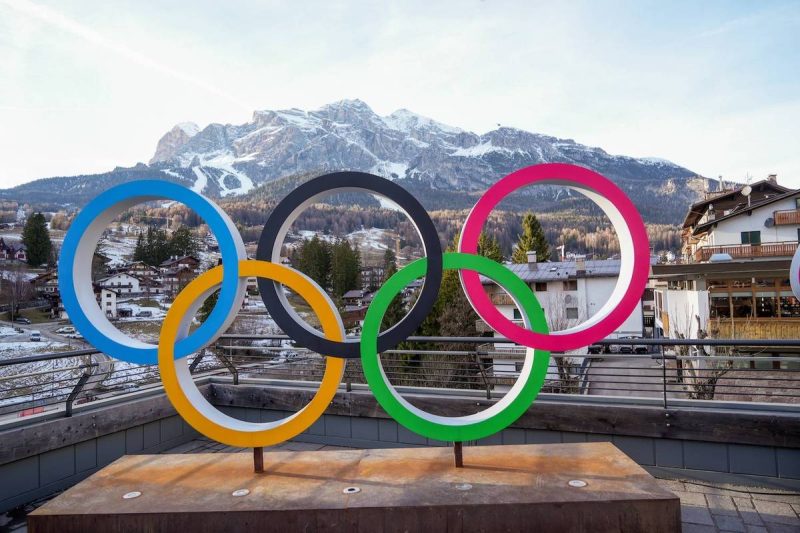
The True Value of Olympic Gold: Beyond Metal and Market Prices
As organizers award the medals for the Milan Cortina 2026 Winter Olympics, fans and spectators alike may have pondered a singular question at some point: how much is an Olympic gold medal actually worth?
The short answer is far less—and far more—than most people assume.
How is an Olympic gold medal made, and what is it worth?
Despite the name, Olympic gold medals are not made of solid gold. Under International Olympic Committee rules, they are primarily composed of silver and plated with a thin layer of gold.
Still, with gold prices now hovering at historic highs, even the thin coating carries more value than it once did.
Using the official size and weight specifications for the Milan Cortina 2026 medals, precious metals firm Dillon Gage calculated what a gold medal would be worth if it were cast entirely in solid gold.
Each Milan Cortina medal measures 80 millimeters in diameter and 10 millimeters thick. Based on those dimensions, Dillon Gage estimates a medal of that size would have a volume of approximately 47.6 cubic centimeters and would contain about 919 grams of gold if produced entirely from the metal.
At the current spot gold price of US$5,061.45 per troy ounce, that equates to roughly US$149,600 in intrinsic metal value alone, all before factoring in craftsmanship or symbolism.
But this is a hypothetical scenario. The actual gold medal that will hang around an athlete’s neck in Italy will contain 500 grams of .999 fine silver and just 6 grams of .9999 gold plating.
Using current spot prices of gold at US$5,061.45 per troy ounce and silver at US$87.00 per troy ounce, the combined intrinsic metal value of a 2026 Olympic gold medal comes to approximately US$2,375.
A silver medal, made of 500 grams of .999 silver, carries a metal value of about US$1,402 at today’s prices.
A bronze medal, composed of 420 grams of copper priced at roughly US$5.90 per pound, has a melt value of about US$5.46.
“The value of gold medals is a curious inquiry we receive, especially around the time of the Olympics,” said Terry Hanlon, president of Dillon Gage Metals. “It’s one of the most recognizable medals in the world, so it’s natural for people to wonder what it’s made of and what it’s actually worth. While Olympic gold medals are not solid gold, the silver content alone carries far more value today than it did just a few years ago, reflecting how much precious-metal markets have changed.”
The medals themselves were designed by a multidisciplinary team led by Raffaella Paniè and produced by the Italian State Mint and Polygraphic Institute (IPZS). Their split-surface design symbolizes the union of Milan and Cortina, as well as the shared effort behind every Olympic achievement.
Precious metals on the rise
Still, as eye-catching as the design may be, the math behind the medals offers a telling snapshot of today’s precious metals market.
When the Paris 2024 Olympic medals were unveiled two years ago, gold was trading around US$2,400 per troy ounce. At that time, the intrinsic metal value of a gold medal was under US$1,000.
Today, gold prices have more than doubled. The theoretical value of a solid-gold Milan Cortina medal now approaches US$150,000, and even the thin six-gram plating layer carries over US$975 in gold value alone.
The surge reflects broader trends in global markets where gold has rallied amid inflation concerns, geopolitical tensions, and rising investor demand for safe-haven assets.
Silver has also strengthened, contributing significantly to the base value of Olympic medals that are largely silver by weight.
But what is it really worth?
Yet despite the fun computation experiment, their actual worth undeniably lies elsewhere: the years of training, the sacrifices, the split-second finishes, and the history attached to standing atop a podium as the world watches.
By the time the flame is lit in Milan and Cortina, more than 5,000 athletes will compete for a place in Olympic history.
While its actual value will technically be worth a few thousand dollars in weight, for the world-class athletes showcasing their prowess, each medal is priceless in their own right.
No matter how high gold prices climb, the opportunity to win on the Olympic stage remains beyond calculation.
Securities Disclosure: I, Giann Liguid, hold no direct investment interest in any company mentioned in this article.